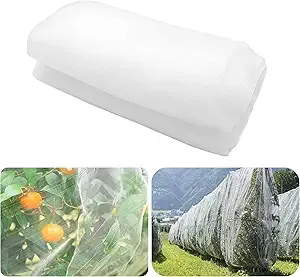
High Quality Bird Netting from ss wire mesh manufacturers
Protecting agricultural yields from avian pests requires a balance between robust physical barriers and ecological permeability. For commercial growers and garden managers, selecting a high-performance bird netting solution is not merely about blocking access, but about ensuring that sunlight, rain, and air continue to nourish the crops. Modern netting technology has evolved to provide lightweight yet resilient structures that prevent birds from landing, roosting, or nesting without causing harm to the animals or damaging the delicate flora beneath.
Whether you are managing a large-scale vineyard, a berry plantation, or a residential greenhouse, the effectiveness of your protection depends on material durability and mesh precision. By utilizing advanced polymers like nylon and polyethylene, today's netting solutions offer superior resistance to UV degradation and mechanical tearing. This guide explores the technical specifications and practical application strategies necessary to implement a reliable bird-proofing system that maximizes crop security while minimizing maintenance efforts.

Engineering High-Resilience Polymers for Long-Term Agricultural Protection
The core efficiency of anti-bird netting lies in its material composition. By employing a combination of nylon and polyethylene, these nets achieve a critical balance of tensile strength and flexibility. These materials are specifically chosen for their ability to withstand harsh environmental exposure, including intense solar radiation and heavy precipitation, ensuring the netting does not become brittle or lose its structural integrity over multiple growing seasons.
From a manufacturing perspective, the construction of the mesh—whether knotless or knotted—determines how the net behaves under tension. Knotless variants typically offer a smoother surface that reduces the risk of snagging on plant branches, while knotted nets provide enhanced stability in high-wind areas. The ability to customize mesh sizes, such as 15mm to 25mm, allows users to target specific bird species, ensuring that the aperture is small enough to block the pest but large enough to maintain optimal airflow.
- UV Resistance: Specialized treatments prevent the plastic from degrading under prolonged sunlight.
- Tear Strength: High-tensile force ensures that the net remains intact even when subjected to wind loads.
- Anti-Corrosive Properties: Unlike metallic alternatives, these polymer nets are immune to rust and chemical corrosion.

Practical Application Scenarios and Operational Installation Logic
Implementing a bird netting system requires a strategic approach to installation to avoid common failures such as sagging or gaps. The most effective method involves securing the netting to mounting stakes and tensioning it with cable ties. This creates a taut surface that physically prevents birds from landing or finding footholds. Because the material is easy to fold and unfold, it can be rapidly deployed across large areas, such as row plantings of grapes or expansive vegetable plots.
Beyond simple bird prevention, these nets serve as a multi-functional shield. In many horticultural settings, they are integrated with garden fences or fence screens to provide a secondary layer of security. A critical operational advantage is the netting's permeability; it allows water and nutrients to reach the soil without the need for frequent removal during irrigation or fertilization cycles, significantly reducing labor costs and time for the farm operator.
For seasonal crops, the ability to remove and re-roll the netting for storage is a key economic driver. When properly handled, the durable polymer structure allows for reuse over several years, making it a highly cost-effective investment compared to single-use covers or expensive permanent structures.
Evaluating Performance: Environmental Impact and Crop Health
A primary concern for any agricultural intervention is whether the solution negatively impacts the growth cycle of the plant. High-quality bird netting is designed to be virtually transparent to the plant's biological needs. By allowing sunlight and carbon dioxide to pass through freely, the mesh ensures that photosynthesis is not inhibited. Furthermore, the slight reduction in water evaporation caused by the mesh can actually lower the total watering requirement in arid climates, contributing to better water resource management.
Unlike chemical deterrents, physical netting is an ethical and sustainable choice. It provides a non-toxic barrier that protects fruit trees, berries, shrubs, and vegetables without harming the wildlife. This makes it ideal for organic farming certifications where the use of synthetic pesticides or harmful repellents is prohibited. The result is a clean, secure environment where crops can reach full maturity without the stress of avian predation.
Technical Specifications and Material Comparison
| Material Type | Mesh Size Options | Typical Service Life | Primary Advantage |
|---|---|---|---|
| Nylon | 15mm - 25mm | 3-5 Years | High Tensile Strength |
| Polyethylene | Customizable | 2-5 Years | Excellent UV Resistance |
| Stretch Net | Customizable | 2-3 Years | Flexible Installation |
| Knotless Mesh | 15mm - 25mm | 3-5 Years | Reduced Plant Snagging |
| Knotted Mesh | 15mm - 25mm | 4-5 Years | Maximum Structural Stability |
Strategic Procurement: Selecting the Right Supplier and Specifications
When sourcing netting, buyers must look beyond the price per square meter and evaluate the manufacturing capability of the provider. A reliable manufacturer should offer professional customization, allowing for specific widths (ranging from 1m to 16m) and lengths (up to 500m) to match the exact dimensions of the field. This eliminates excessive waste and reduces the number of seams, which are often the weakest points in a netting installation.
Quality control is paramount. Buyers should verify that the netting is produced in a facility with a proven track record of R&D and technical innovation. The ability to provide free samples allows for real-world testing of the mesh's strength and transparency before committing to a bulk order. In the context of global supply chains, choosing a partner with an integrated production facility ensures shorter lead times and stricter adherence to quality standards.
Future Trends in Protective Netting and Sustainable Farming
The industry is moving toward "intelligent" netting—materials that can adapt to changing environmental conditions. We are seeing an increase in the demand for multi-purpose nets that combine bird prevention with anti-hail or anti-insect properties. This convergence allows farmers to solve multiple problems with a single installation, further optimizing the use of labor and materials.
Sustainability is also driving the shift toward recyclable polymers. As the agricultural sector faces increasing pressure to reduce plastic waste, manufacturers are developing netting that maintains high performance during its service life but can be efficiently recycled at the end of its use. Integrating these advanced materials into urban infrastructure and greening projects marks the next phase of evolution for the woven mesh industry.
Common Inquiries Regarding Bird Netting Systems
Can bird netting be used for multiple seasons?
Yes, if the netting is made from high-quality nylon or polyethylene with UV stabilization, it is designed to be durable for several growing seasons. Proper removal, cleaning, and storage after each season can extend its service life to 5 years.
How do I choose the correct mesh size for my crops?
Mesh size should be based on the size of the birds you are trying to exclude. For small birds, 15mm x 15mm is typically sufficient. For larger avian pests, 20mm or 25mm options provide a good balance between protection and airflow.
Does the netting block necessary sunlight and rain?
No. The open-weave design is specifically engineered to allow water, sunlight, and air to pass through freely, ensuring that the crops' biological growth process is not interrupted.
Is the installation process complex for large areas?
It is relatively straightforward. The netting is typically tied to mounting stakes and pulled tight with cable ties. Because it can be cut to any size, it can be adapted to fit irregular garden shapes or long orchard rows.
What are the advantages of nylon over polyethylene?
Nylon generally offers higher tensile strength and greater elasticity, making it more resilient to heavy winds and physical stress, whereas polyethylene is often praised for its exceptional UV resistance and cost-efficiency.
Can I customize the color of the netting?
Yes, most professional manufacturers offer optional colors such as black, white, and green to help the netting blend into the environment or meet specific visibility requirements.
Technical Resources and Industry Standards
- Food and Agriculture Organization of the United Nations
- International Organization for Standardization (ISO) - Polymer Standards
- Asian Plant Protection Society
- United States Department of Agriculture - Pest Management
Selecting the right protective netting is a critical decision for any serious agricultural operation. By focusing on material integrity, precise specifications, and a supplier with deep manufacturing expertise, you can safeguard your investment and ensure a bountiful harvest year after year.
Related Protective Netting Solutions