0%

Table of Contents

Insect nets, often referred to as mosquito nets, are a crucial component in global health and agricultural practices. Their primary function is to create a physical barrier against insects, preventing bites and protecting crops. This seemingly simple technology has a profound impact, significantly reducing the spread of vector-borne diseases like malaria, dengue fever, and Zika virus, as well as minimizing damage to agricultural yields from pests. Understanding the nuances of insect net technology – from materials and construction to effective deployment and maintenance – is vital for maximizing its benefits.

The demand for effective insect nets is globally significant. According to the World Health Organization (WHO), malaria alone causes over 600,000 deaths annually, disproportionately affecting children under five in sub-Saharan Africa. Insecticide-treated nets (ITNs) are a key preventative measure, and large-scale distribution programs are underway, often supported by organizations like the UN and the Global Fund. Furthermore, in agricultural settings, insect nets are increasingly used to protect high-value crops, ensuring food security and economic stability, particularly in developing nations.

The importance of insect nets extends beyond direct health and agricultural benefits. They contribute to broader socio-economic improvements, such as increased school attendance (as illness rates decline) and enhanced productivity (as individuals are healthier and crops are protected). The widespread adoption of insect nets demonstrates a cost-effective and sustainable approach to tackling significant global challenges.

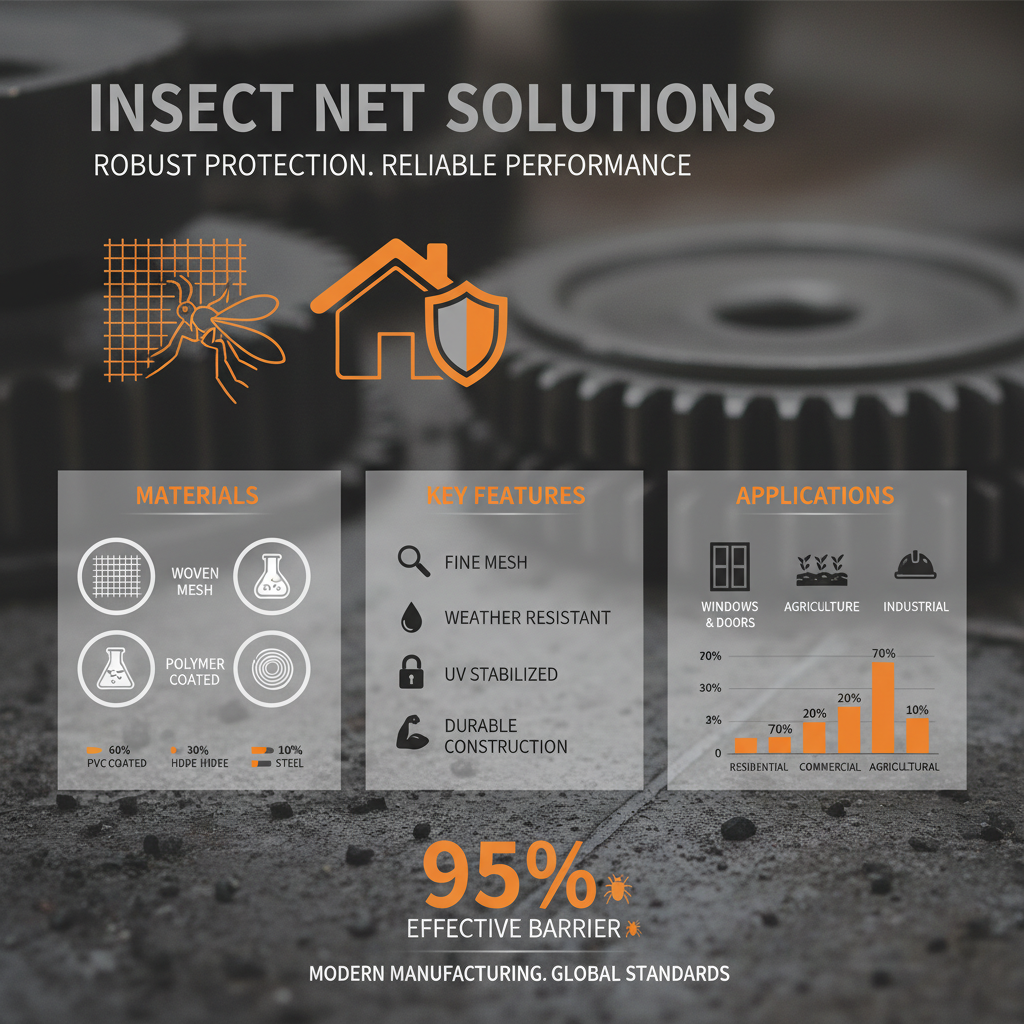
The Essential Role of Insect Net in Global Health and Sustainable Agriculture

Introduction to insect net

The Essential Role of Insect Net in Global Health and Sustainable Agriculture

Insect nets are fundamentally barriers designed to exclude insects. They vary significantly in materials, mesh size, and treatment, but all share the common goal of preventing insect contact. From simple, hand-woven cotton nets to advanced, long-lasting insecticidal nets (LLINs), the core principle remains the same: protection through physical exclusion. This simplicity belies their immense impact, particularly in regions plagued by insect-borne diseases.

Modern insect net technology focuses on durability, affordability, and effectiveness. Research and development efforts are concentrated on improving insecticide treatments, increasing net longevity, and adapting net designs to suit diverse environmental and cultural contexts. The continued evolution of insect nets is crucial for addressing the ongoing challenges of disease prevention and agricultural protection worldwide.

Defining insect net

An insect net is a protective barrier, typically made of fine mesh, designed to prevent insects from accessing a defined space. This space can be a sleeping area (as in bed nets), an entire room (as in window screens), or an agricultural field (as in crop covers). The primary purpose is to prevent insect bites or protect crops from insect damage, ultimately reducing the transmission of diseases or increasing agricultural yields.

The concept of using barriers to exclude insects dates back centuries. However, the modern insect net, particularly the ITN, is a product of 20th and 21st-century advancements in materials science and public health. Its connection to modern industry stems from the demand for scalable, cost-effective solutions to global health and agricultural challenges.

Increasingly, the definition extends to include sustainable and environmentally friendly options, moving away from reliance solely on synthetic insecticides. Biodegradable materials and alternative insect repellents are becoming focal points in the evolution of insect net technology.

Core Components of insect net

Several key factors determine the effectiveness and suitability of an insect net. First, mesh size is critical. Smaller mesh sizes offer better protection against smaller insects, but can also reduce airflow. Second, material durability impacts the net's lifespan and resistance to tears and wear. Materials like polyester and polyethylene are commonly used for their strength and cost-effectiveness.

Third, insecticide treatment (in the case of ITNs) is a significant component. The type of insecticide, its concentration, and its longevity all influence the net's effectiveness against disease vectors. Fourth, ease of use and maintenance is crucial for widespread adoption. Nets must be easy to hang, repair, and clean to ensure consistent protection.

Finally, cost-effectiveness plays a vital role, particularly in large-scale distribution programs. The net must be affordable enough to reach those who need it most. All these components work in concert to provide reliable and sustainable insect protection.

Global Applications of insect net

Insect nets are deployed globally in a diverse range of settings. In sub-Saharan Africa, they are central to malaria control programs, distributed through national health systems and NGOs. In Southeast Asia, they are used to combat dengue fever and other mosquito-borne illnesses. In post-disaster relief operations, insect nets provide immediate protection against disease outbreaks in crowded and unsanitary conditions.

Beyond public health, insect nets are extensively used in agriculture. Farmers in many countries employ nets to protect vulnerable crops from insect pests, reducing the need for chemical pesticides and improving yields. Greenhouses and nurseries frequently utilize insect netting to create controlled environments.

Even in developed nations, insect nets find applications. Window and door screens are commonplace, preventing insects from entering homes. Specialized netting is used in livestock farming to protect animals from biting insects, and in aquaculture to prevent predation.

Insect net Effectiveness by Method


Advantages of Using insect net

The advantages of using insect nets are multifaceted. The most obvious benefit is cost-effectiveness; compared to other disease prevention methods, such as vaccines or extensive chemical spraying, insect nets are relatively inexpensive. Furthermore, they offer a non-toxic, environmentally friendly solution, particularly when compared to persistent pesticides.

Insect nets also contribute to improved public health outcomes, reducing morbidity and mortality from insect-borne diseases. This translates to economic benefits, as healthier populations are more productive and require less healthcare. The simple act of sleeping under a net can dramatically improve quality of life.

Future Trends in insect net Technology

Future developments in insect net technology are focusing on sustainability and enhanced effectiveness. Research into biodegradable materials, such as plant-based fibers, aims to reduce the environmental impact of net disposal. Innovative insecticide formulations with longer-lasting effects and reduced toxicity are also under development.

Digital technologies are playing an increasing role. Smart nets equipped with sensors could monitor insecticide levels and alert users when retreatment is necessary. Data analytics can optimize net distribution and track usage patterns to maximize impact.

Personalized insect nets, tailored to specific regional disease vectors and environmental conditions, are another emerging trend. This involves incorporating multiple active ingredients or using specialized mesh designs to target specific insect species.

Challenges and Solutions for insect net

Despite their effectiveness, insect nets face several challenges. Insecticide resistance is a growing concern, as mosquitoes evolve to survive exposure to commonly used insecticides. Net damage and improper use reduce their protective efficacy. Logistical challenges in distribution, particularly in remote areas, hinder widespread access.

Solutions include developing new insecticides with different modes of action, promoting responsible net usage and maintenance through education programs, and utilizing innovative distribution strategies, such as drone delivery and community-based health workers.

Strengthening monitoring and surveillance systems to track insecticide resistance and net coverage is also crucial. Investing in research and development to create more durable and sustainable nets will further address these challenges.

Summary of Challenges and Solutions for Effective insect net Implementation

Challenge Severity (1-10) Potential Solution Implementation Cost (USD)
Insecticide Resistance 8 New Insecticide Formulations 500,000
Net Damage & Lifespan 7 Durable Material Development 300,000
Distribution Logistics 6 Drone Delivery Networks 750,000
User Education & Compliance 5 Community Health Worker Programs 200,000
Monitoring & Surveillance 4 Data Analytics & Reporting Systems 150,000
Funding & Sustainability 9 Diversified Funding Streams Ongoing

FAQS

What is the lifespan of a typical long-lasting insecticidal net (LLIN)?

A standard LLIN is designed to remain effective for around three to five years with proper use and care. However, its effectiveness declines over time due to physical damage, washing, and the degradation of the insecticide treatment. Regular monitoring and retreatment (where possible) can extend the useful life, but replacement is necessary when the net shows significant signs of wear or insecticide depletion. Optimal efficacy relies on consistent use and proper handling to minimize damage and maintain the protective barrier.

How does insecticide resistance affect the use of insect nets?

Insecticide resistance is a major threat to the effectiveness of LLINs. When mosquitoes develop resistance to the insecticides used in the nets, the nets become less effective at killing or repelling them. This leads to increased disease transmission rates. Strategies to combat this include using nets treated with different insecticides, rotating insecticide classes, and implementing integrated vector management programs that combine net use with other control measures like larval source management.

Are insect nets safe for pregnant women and infants?

Insect nets are generally considered very safe for pregnant women and infants. LLINs approved by the WHO undergo rigorous testing to ensure they pose minimal risk to human health. The benefits of using a net to prevent mosquito bites, and thus reduce the risk of malaria or other mosquito-borne diseases, far outweigh any potential risks. However, it’s important to ensure proper net hygiene and avoid direct contact with the insecticide treatment if possible, particularly for newborns.

How often should insect nets be washed, and what is the best way to do it?

Insect nets should be washed infrequently, typically only 1-2 times per year, as washing can remove the insecticide treatment and reduce the net's lifespan. When washing is necessary, use a mild soap and lukewarm water. Gently hand wash the net and avoid harsh scrubbing or bleaching. Allow the net to air dry completely, preferably in the shade, before reusing it. Avoid re-treating nets unless specifically recommended by health authorities.

What are the environmental impacts of insect nets, and are there sustainable alternatives?

Traditional insect nets made from synthetic materials contribute to plastic waste, posing an environmental challenge. However, research is underway to develop more sustainable alternatives, such as nets made from biodegradable materials like cotton or plant-based fibers. Using environmentally friendly insecticides and promoting responsible net disposal practices can also minimize the environmental impact. Integrated vector management approaches that reduce reliance on nets are also being explored.

How can communities be educated about the proper use and maintenance of insect nets?

Effective community education is essential for maximizing the impact of insect nets. This can involve health workers conducting household visits, organizing community meetings, and using various communication channels like radio, television, and social media to disseminate information. Education should cover proper net hanging, washing, repair, and the importance of consistent use. Involving local leaders and community members in the education process can increase ownership and sustainability.

Conclusion

Insect nets represent a cornerstone of global health and agricultural protection. From their simple origins as physical barriers to their evolution into advanced, insecticide-treated technologies, they have demonstrably reduced the burden of disease and increased food security worldwide. Understanding the core components, global applications, and future trends of insect net technology is vital for continued success in combating insect-borne illnesses and protecting vulnerable populations.

Looking ahead, sustained investment in research and development is crucial for addressing challenges such as insecticide resistance and environmental sustainability. Continued innovation in materials, insecticides, and distribution strategies will ensure that insect nets remain a powerful and effective tool for safeguarding human health and promoting sustainable agricultural practices. Visit our website: insect net to learn more.

Bernard Caldwell

Bernard Caldwell

Bernard Caldwell serves as a Senior Project Manager at Anping County Yongji Products Co., Ltd. with a focus on large-scale infrastructure projects. He leads the implementation of galvanized woven mesh solutions for river management and construction clients. Bernard brings a practical, hands-on approach honed over 20 years in civil engineering.
Previous Effective Bug Net Solutions for Public Health and Agricultural Protection
Next Advancing Agricultural Protection with Effective Aphid Proof Netting Solutions
text